



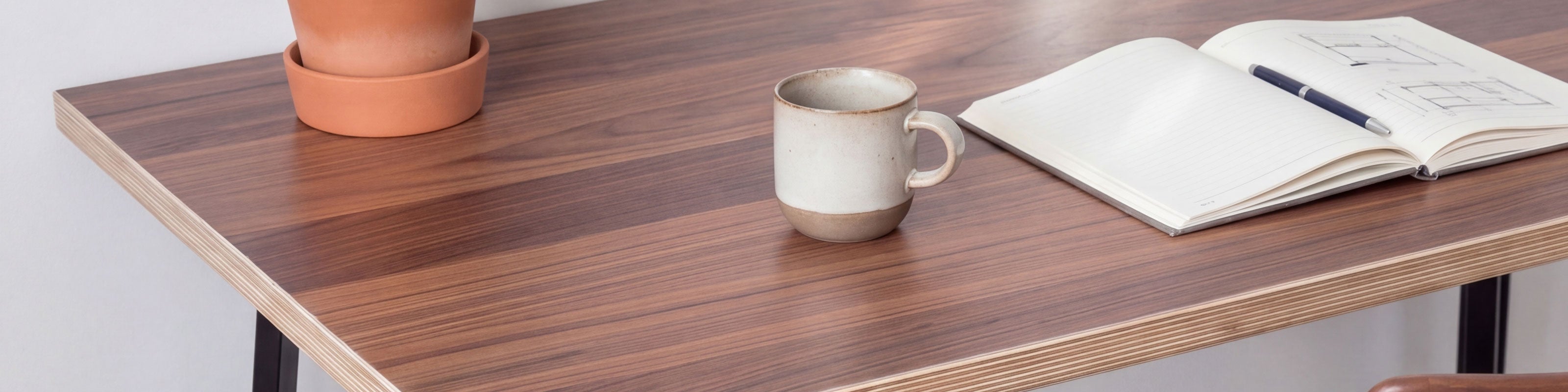
Walnut Tops
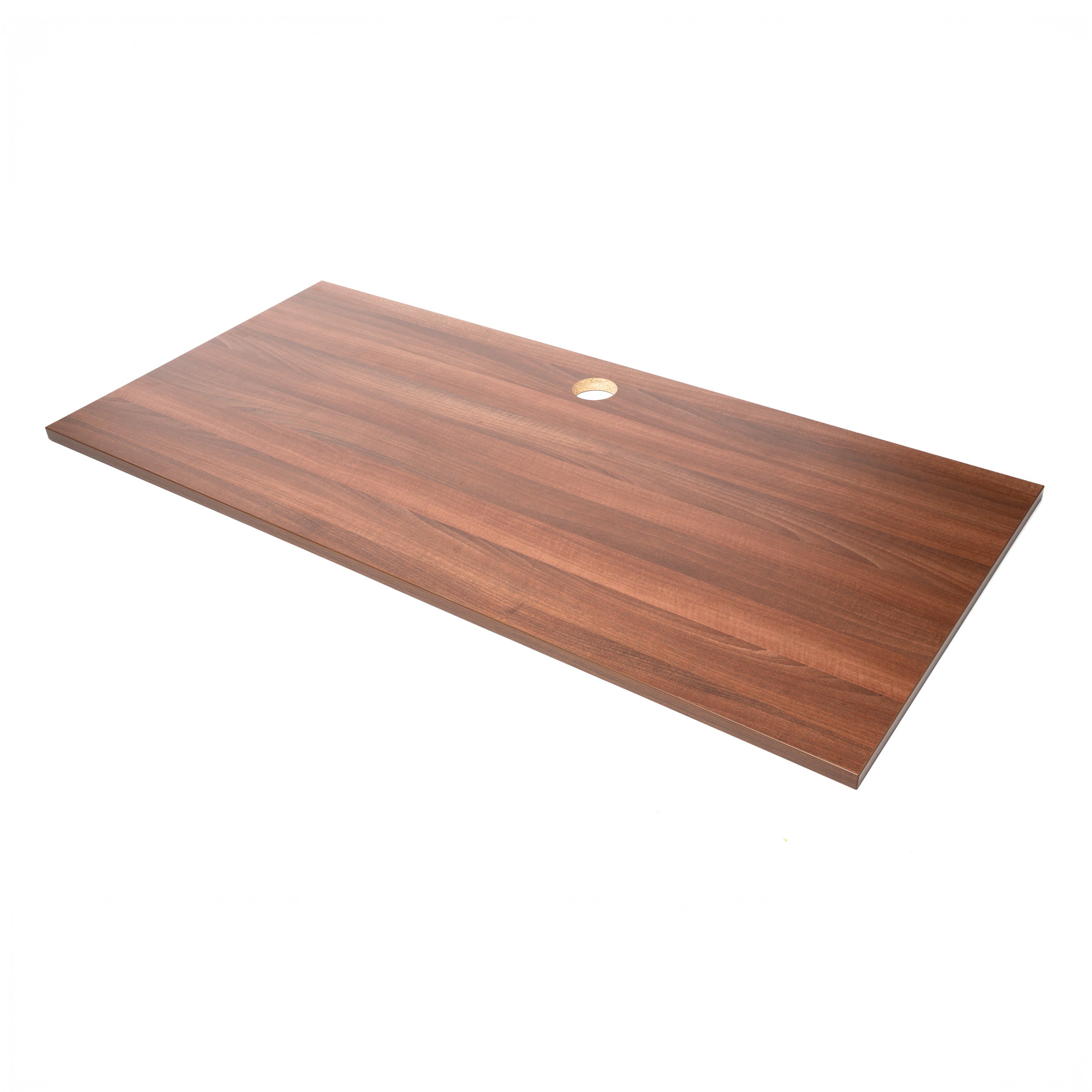
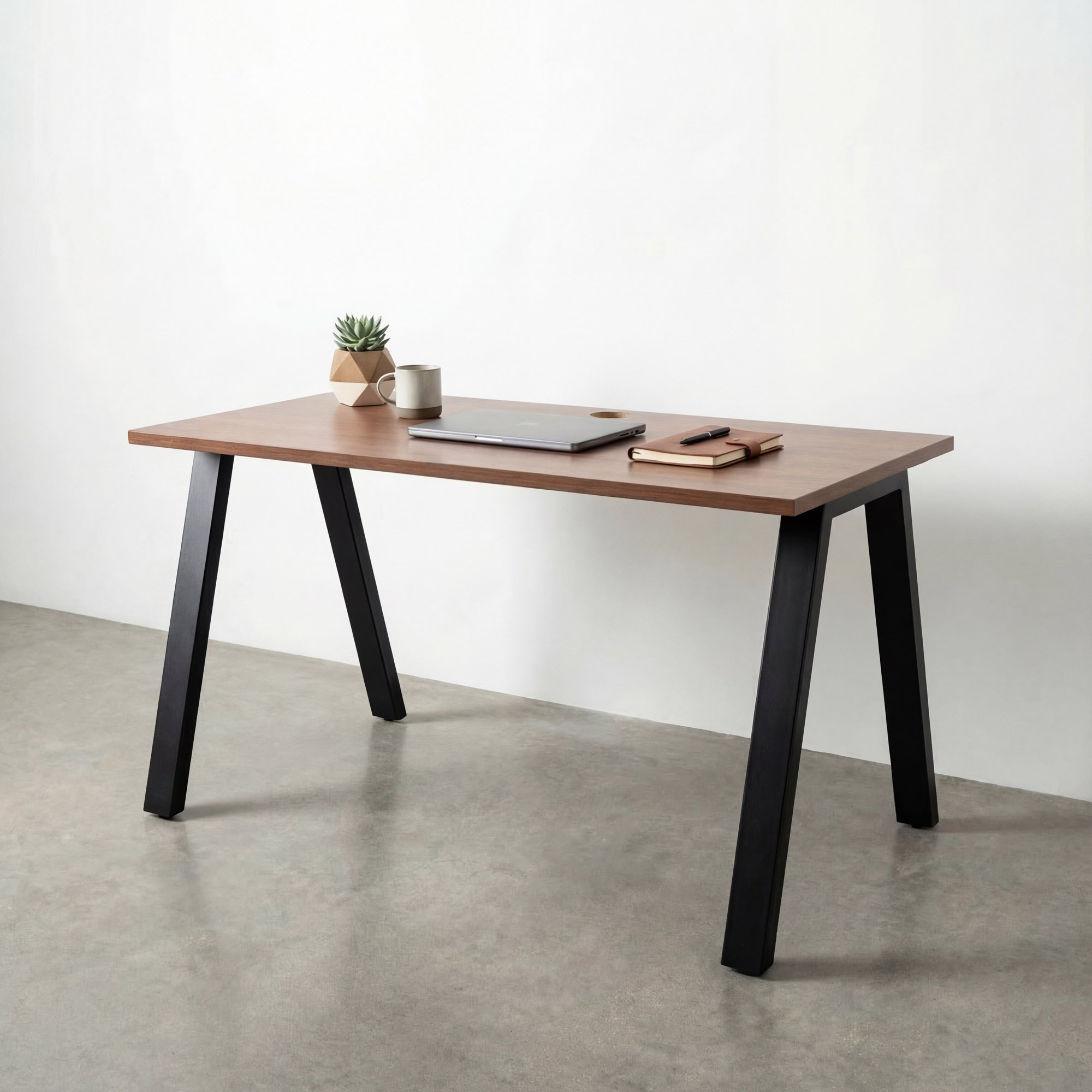
Walnut plywood tops for tables, benches, sideboards, and console tables. American black walnut on a 25mm Baltic Birch plywood core. Mounts to legs or a frame. Hand-finished with hard wax oil.
Filters
4 products

The walnut
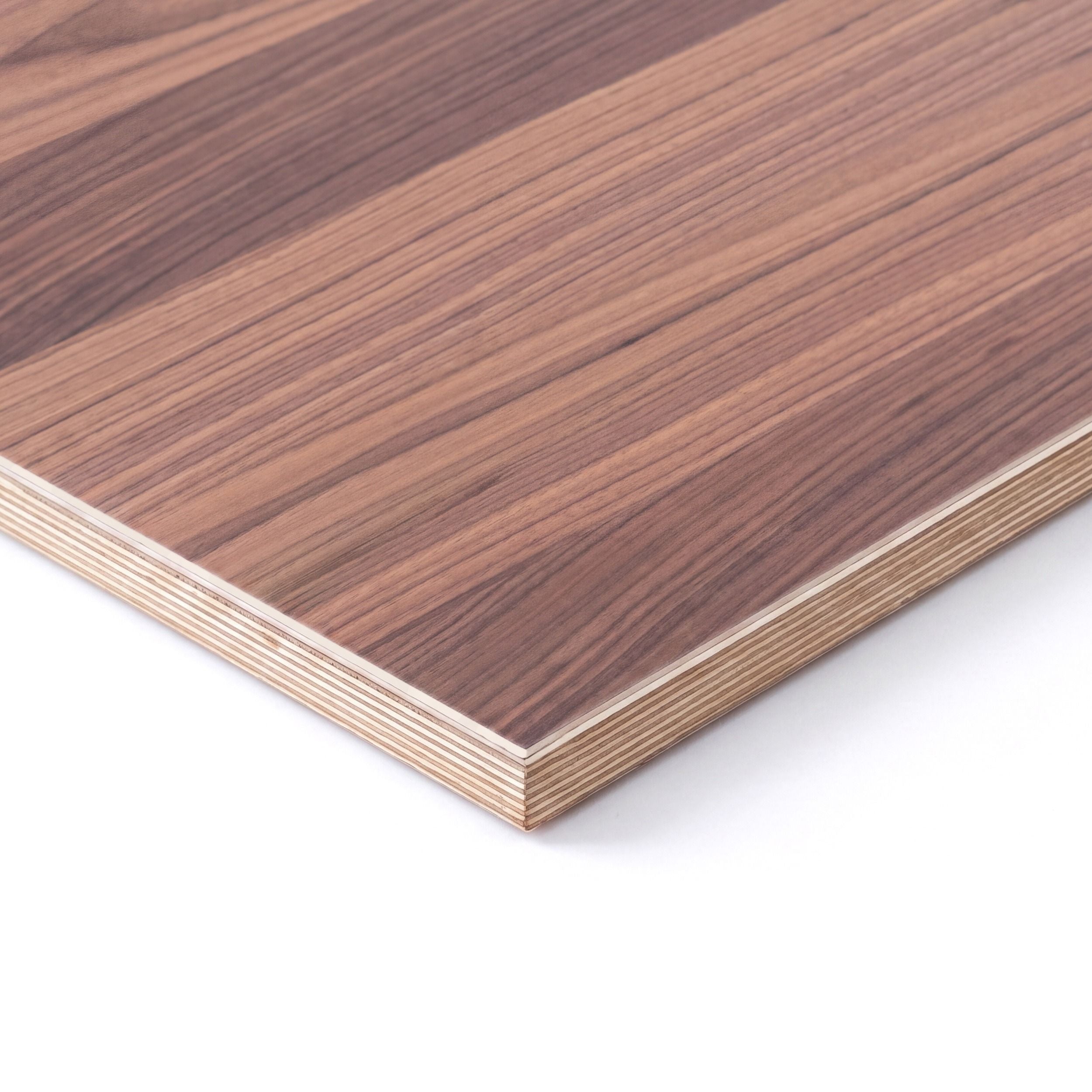
American black walnut on an AA-grade Baltic birch plywood core. 1.5mm chamfered edge, sanded smooth and hand-finished with hard wax oil on every face. Walnut sits deeper than oak in colour and bolder in grain. Reads as mid-century or industrial; works as a statement piece against white walls, holds its own in darker rooms.
Walnut mellows under natural light. Where oak deepens to a richer honey, walnut moves the other way: warmer tones over months and years. Hard wax oil doesn't block UV; positions in sustained direct sunlight will see the change faster.
Why plywood, not solid walnut
Solid walnut and walnut plywood are different design choices, not better-or-worse versions of the same thing. Solid walnut is heirloom: decades of use, deep refinishable, naturally rustic. Walnut plywood is the modern alternative. At 25mm it's flat, stiff, and dimensionally stable. Solid wood shifts with the seasons and needs a skirt or apron with floating fixings; plywood doesn't, which is what lets us build skirtless tables with legs visible underneath.
Cost is real but isn't the lead reason: walnut plywood is significantly less than solid walnut, without losing the visual identity of American black walnut on the face. We make these because we love the modern look and the engineering, same Baltic Birch core under every Hairpin top.
Pick by use-case
- Table tops: desks, dining tables, workbenches, bar tables. Walnut plywood from 120 × 60 to 180 × 80 cm.
- Bench tops: 34 cm wide, in 120 / 150 / 180 cm lengths. Walnut plywood.
- Console tops: 25 cm or 34 cm wide narrow tops. The 34 cm width suits hallway consoles, sideboards, and media units; the 25 cm width suits slim consoles and sofa-table builds.
Looking for shelves? See walnut shelf boards.
The Hairpin standard
Each top is hand-finished with hard wax oil on every face: top, bottom, sides, and edges. The 1.5mm chamfered edge is sanded smooth to the touch. Hard wax oil penetrates the wood rather than forming a film, so the walnut grain stays warm and tactile under your hand.
What you'll need
Tops ship undrilled as standard. For desk and dining builds, pair with 71cm legs; finished height comes out around 72.5–73cm. We think a black chunky X-frame or box hairpins look especially good with walnut, but the full desk legs and dining table legs collections are worth a browse. For benches and lower seating builds, see bench legs. Mounting plates and fixing screws are included with every leg set. Or check our furniture sets for desks and dining tables already paired with legs; they include the option to pre-drill holes when you order.
DIY drilling needs a standard wood drill and a marking template. The Premium Drilling Kit pairs a depthstop bit with a marking punch for repeatable results.
Other materials
Same 25mm Baltic Birch core under our other facings: oak plywood, birch plywood, and Formica birch plywood. Oak for honey-toned warmth and versatility; birch for a clean Scandi face; Formica for wipe-clean kitchen and kids'-table duty.
FAQ
What is faced plywood?
What is AA-grade Baltic birch plywood, and why does it matter?
How does plywood compare to solid wood as a tabletop?
Oak, walnut, birch, or Formica: which facing for what?
How durable is plywood for everyday use?
Oak or walnut: which is right for my room?
Can't find your answer? Contact us.