


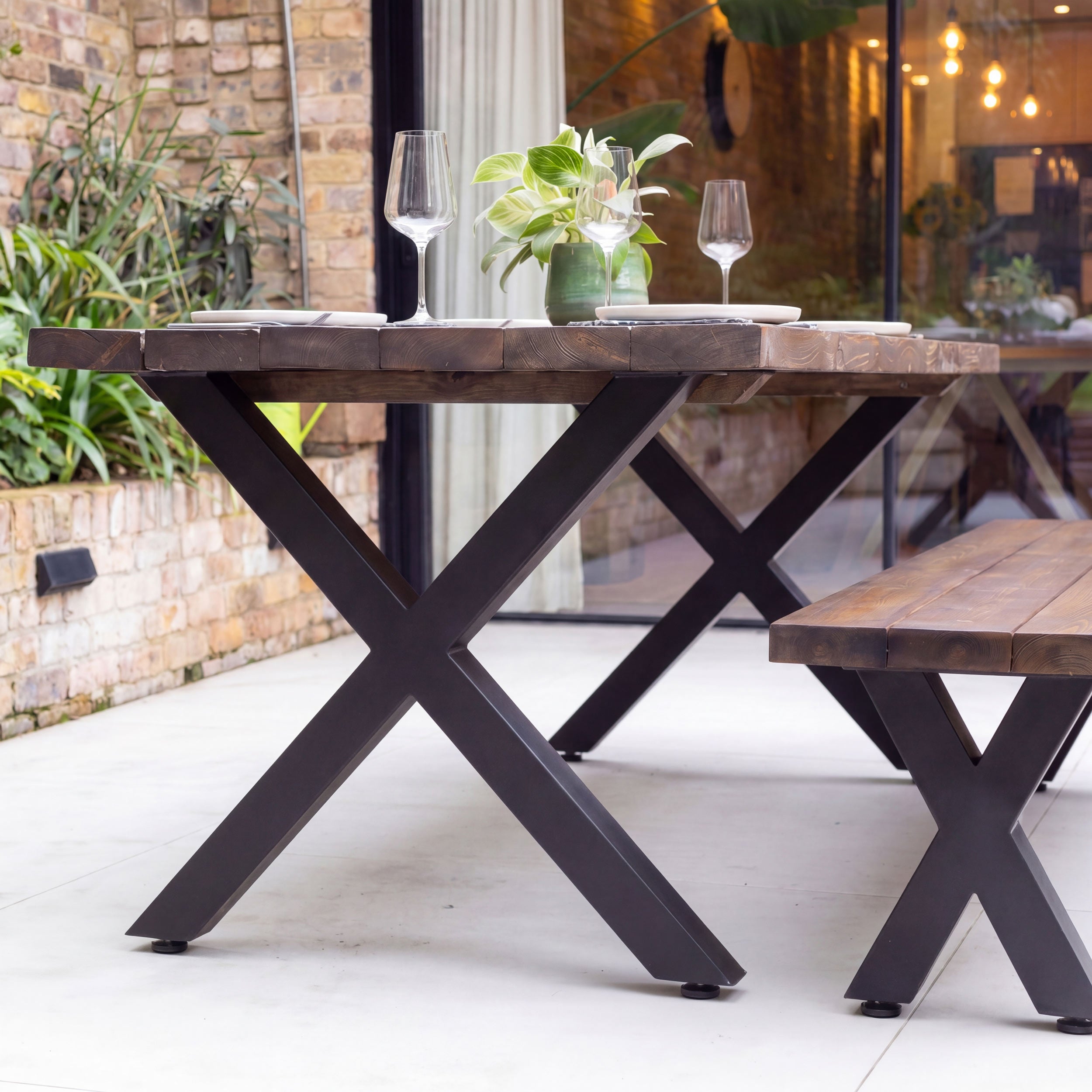




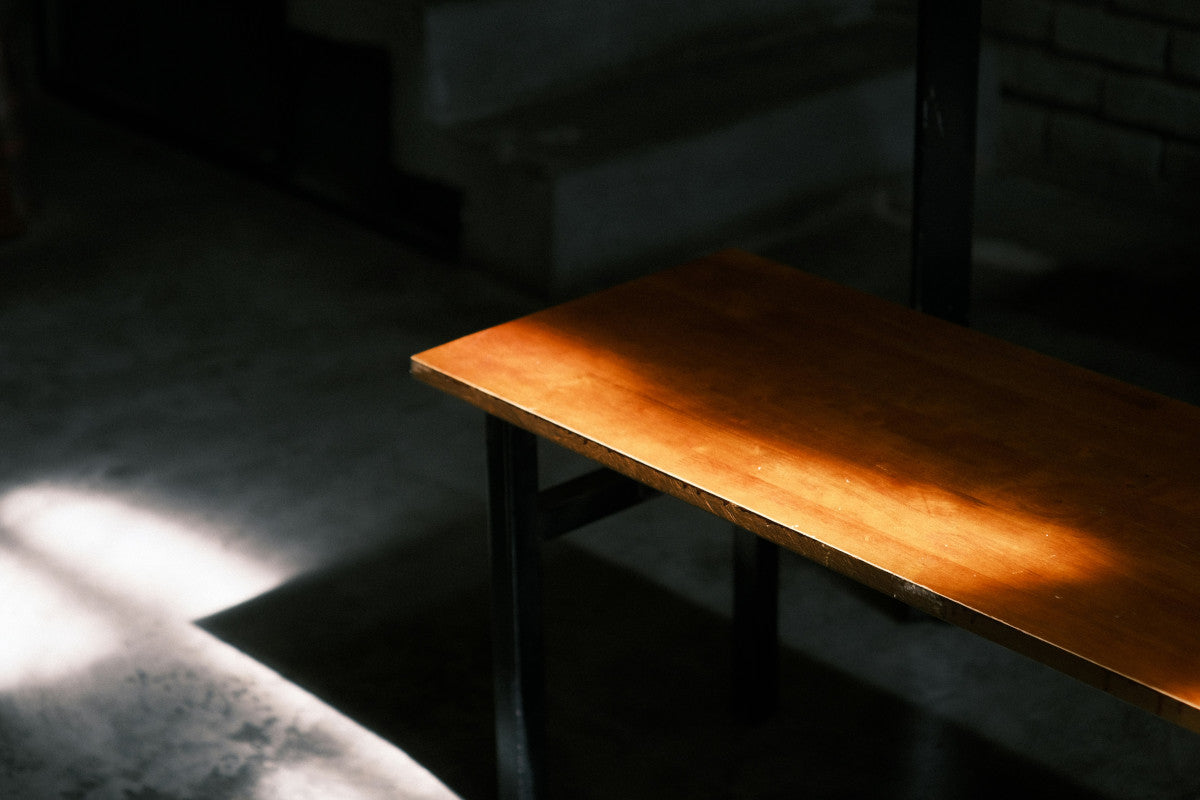
There’s nothing worse than realising you’ve stained your favorite bench, be it chemicals on a workbench or food/drink on an outdoor dining table. But we’re going to show you how to get stains out of bench tops so you can restore its lustre safely.
The key takeaway is to slow down rather than react. You don’t want to reach for harsh cleaners straight away. Different materials react differently, and the right approach can often lift a stain without damaging the surface underneath.
If a mark turns out to be too deep to rescue, though, you’re never stuck with a ruined piece. You’ll find a full range of stunning bench tops to replace it with here at The Hairpin Leg Co. - many of which pair beautifully with our bench legs!
Shop now or learn how to remove stains from bench tops below.
How to Get Stains Out of Bench Tops
Most of the time, removing stains from bench tops is straightforward. But the last thing you want is to cause more harm than good. So, start by figuring out what you’re up against.
Identify the Type of Bench Top Material First
Solid timber, laminate, composite or something coated with a protective finish all call for their own unique cleaning approaches. Timber reacts differently to moisture and abrasion than synthetic surfaces, and using the wrong method can make a small mark worse.
Check the edges and underside if you’re unsure what exactly you’re working with. Laminate and particle board have a layered construction, but solid wood will have consistent grain throughout.
Work Out What Kind of Stain You’re Dealing With
Not all stains behave the same way, so this is the other detail you need to narrow down before we can get into how to get stains out of bench tops.
For instance, oil marks from food or machinery sit differently on the surface than water rings or dye transfer. Dark patches may be moisture trapped beneath a finish, while lighter marks can be heat damage or chemical residue.
Start With Gentle Cleaning Methods
The rule of thumb with cleaning bench tops is to begin with the least aggressive choice and slowly work your way up to more intensive measures if need be.
That means warm water, a little washing-up liquid and a soft cloth should be your first line of defence against the stain. This can lift a surprising amount of grime on its own.
Work slowly and dry the area afterwards to avoid lingering moisture, which will make matters worse. Speaking of which, don’t use any moisture harsh pads or strong solvents early on. These can dull finishes or leave visible patches that then need more repair work later.
Removing Light Surface Stains Safely
A mild baking soda paste or a specialist wood cleaner often works well for marks that sit close to the surface. Apply lightly, rub with a soft cloth following the grain, then wipe clean. This can be plenty to remove food stains or minor scuffs without changing the colour of the finish.
Tackling Deeper Stains in Timber Bench Tops
The longer a stain has to soak into the wood, the more work it’ll take to work it out. But you can still learn how to get stains out of bench tops!
We recommend light sanding with fine-grit paper to lift the top layer and minimise the mark. Work gradually and keep the area even so you don’t create a visible dip.
Oxalic acid treatments are sometimes used for darker water stains, but test these in a hidden area first and follow safety guidance carefully.
Cleaning Laminate or Composite Bench Tops Without Damage
Laminate and composite surfaces don’t respond well to aggressive sanding - or anything that scratches the finish, for that matter. Stick with non-abrasive cleaners and soft cloths. Mild household cleaners can typically handle food or drink marks without impacting the surface pattern.
It’s important to set your expectations. Removal may not be possible if the stain sits below the laminate layer. At that point, it won’t be a matter of learning how to remove stains from bench stops, but how you can blend the area to disguise it a bit. Speaking of which…
When to Sand and Refinish a Bench Top
Refinishing the bench top may be your only option if the stain is still visible after cleaning. Sand the entire surface evenly instead of just the stain. Then apply a fresh oil, wax or protective coating. This will make sure the restored bench looks consistent.
Take your time with preparation. It’ll pay off in the end!
What If You Can’t Remove the Stain in Your Bench Top?
We hope these tips on how to get stains out of bench tops help you breathe fresh life into your furniture or workstation. But sometimes a mark has soaked too deeply or damaged the surface beyond what cleaning alone can fix. Here’s what you can do instead.
Blending the Stain Instead of Removing It
We mentioned this earlier. Blending a stain into the surrounding surface often works better than fighting it if the stain won’t lift all the way. Lightly sand the area and apply a tinted oil, stain or wax to soften harsh edges and ensure the colour sits evenly.
This approach works best on timber tops that already have natural variation in tone. When done right, the mark becomes an indistinguishable part of the bench’s character.
Refinishing or Recoating the Entire Surface
You also learned about this approach when cleaning alone won’t cut it. It takes time, but it’s a fulfilling project when you finally look at the bench and see it back to its original pristine condition.
Sand back evenly, clean away dust, and apply a fresh finish suited to the material. Oils and hardwax coatings are your best bet for timber because they’re so easy to maintain over time.
Adding a Protective Top Layer or Overlay
Adding a new layer can be a practical solution in cases where the surface itself is worn or heavily marked. Thin timber sheets, laminate overlays or even glass panels can refresh the look without having to totally rebuild the bench.
When It’s Time to Replace or Rebuild the Bench Top
All good things come to an end eventually. Deep structural damage, swelling from moisture, or stains that have penetrated through coatings and into the core material are some instances where you may find it makes more sense to just replace the bench top altogether.
You’ll find a range of bench tops designed to pair easily with your existing legs or new furniture legs here at The Hairpin Leg Co. We’ve been the go-to choice for makers and DIYers for over a decade now, because everything we sell is crafted with durability and style in mind.
Our tops are easy to pair with any of our table legs for a true work of art. You can choose from plywood, laminate or hardwood (oak or ash) based on your budget and preferences. Either way, your order is backed by 60-day returns and a 5-year warranty so you can shop with confidence.
Choose a new bench top that suits your space, order today, and bring your setup back to life with a surface built to last!
“I ordered two sets of the same bench legs from Hairpin Legs. The products were delivered promptly (with next day dispatch) and were of good quality.” - Wai
“Great table and bench. Look brilliant, well made and solid, well packaged and on time. What’s not to like?” - Alex
“This is the second set of table and bench metal legs that we’ve bought and both have been great. We can’t fault the product and delivery was swift.” - Robert
Final Words on How to Remove Stains From Bench Tops
Stains happen, but most bench tops can be brought back with the right approach and a bit of patience. We hope this guide on how to get stains out of bench tops helps!
But when you decide it’s time to refresh your setup from scratch, take a look at our online storefront and see what catches your eye - be it one of our table tops, a set of legs or both. Join hundreds of thousands of DIYers and makers who trust The Hairpin Leg Co. today!
Related Articles
How to Raise a Bed Without Legs | How to Attach Table Legs | How to Fix a Wobbly Desk

Leave a comment
This site is protected by hCaptcha and the hCaptcha Privacy Policy and Terms of Service apply.