


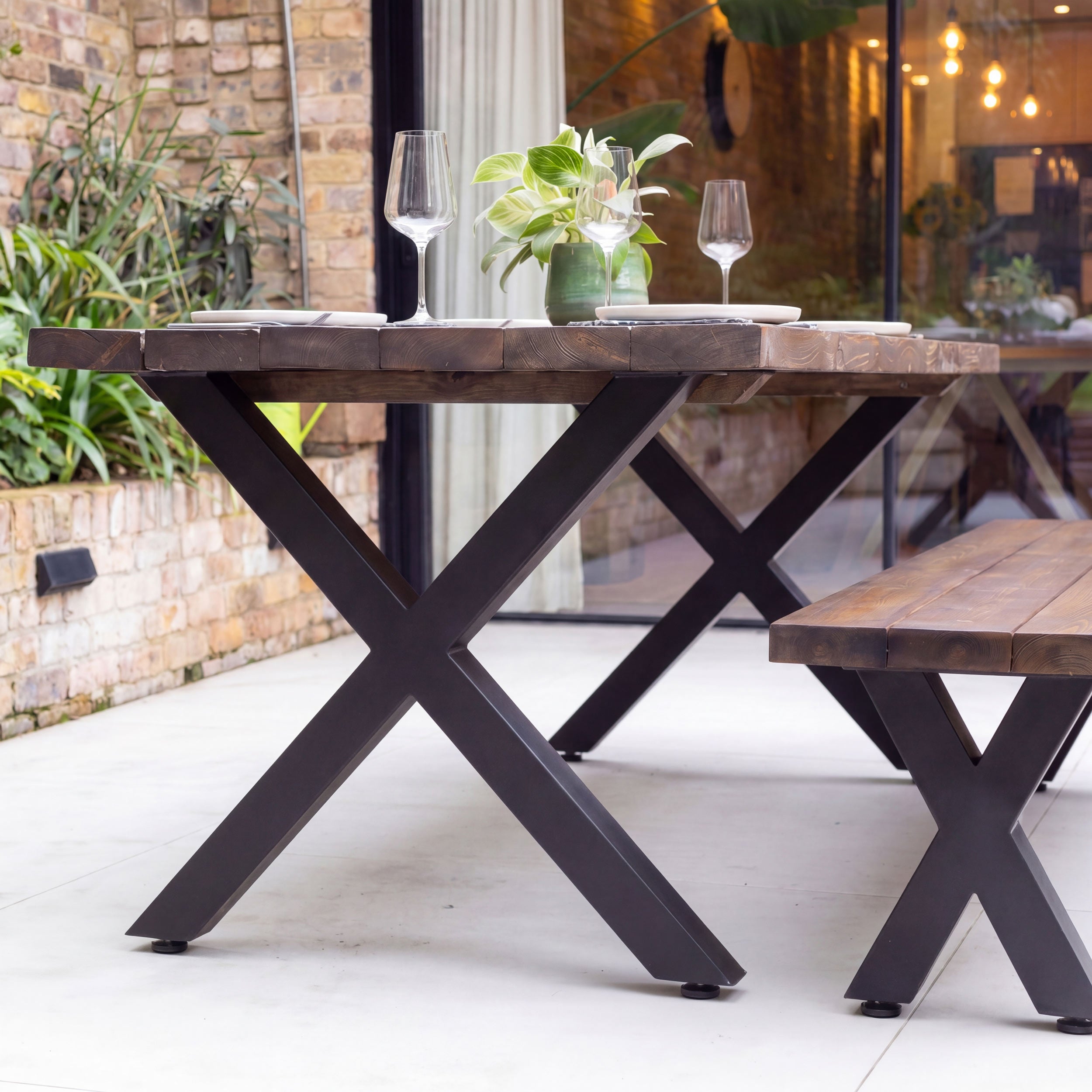



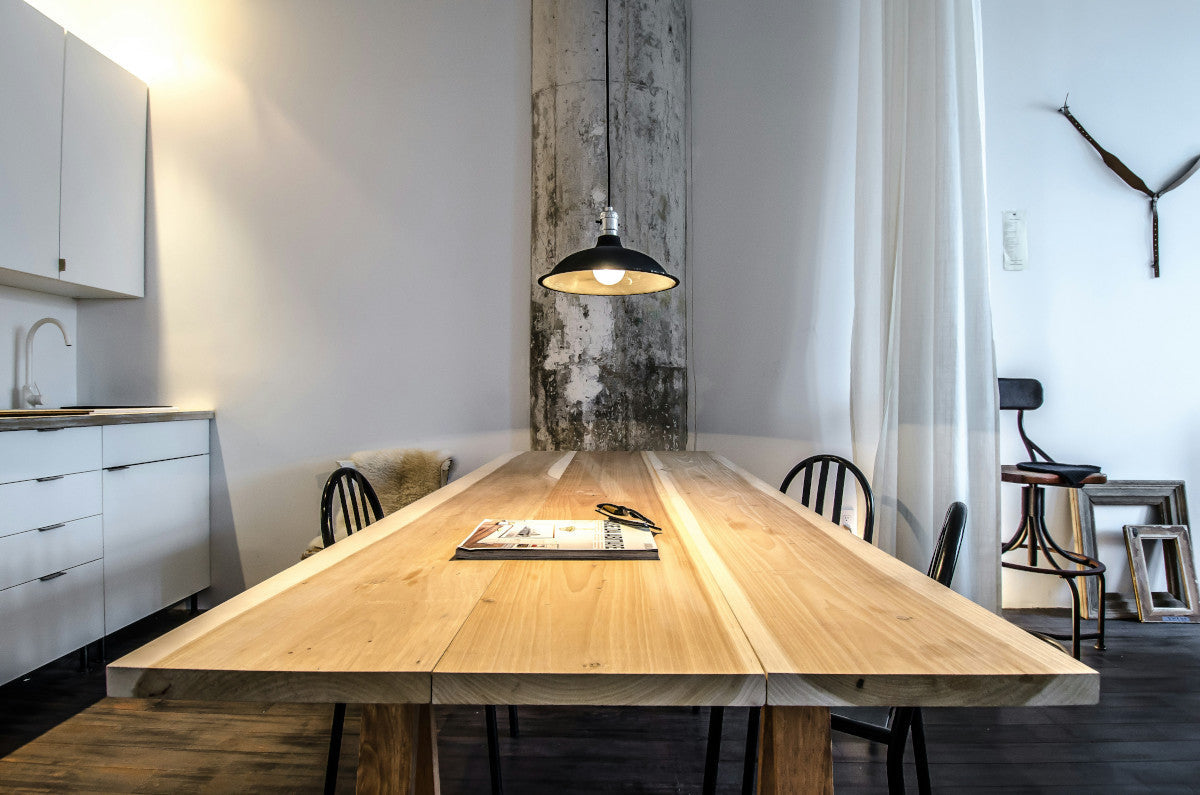
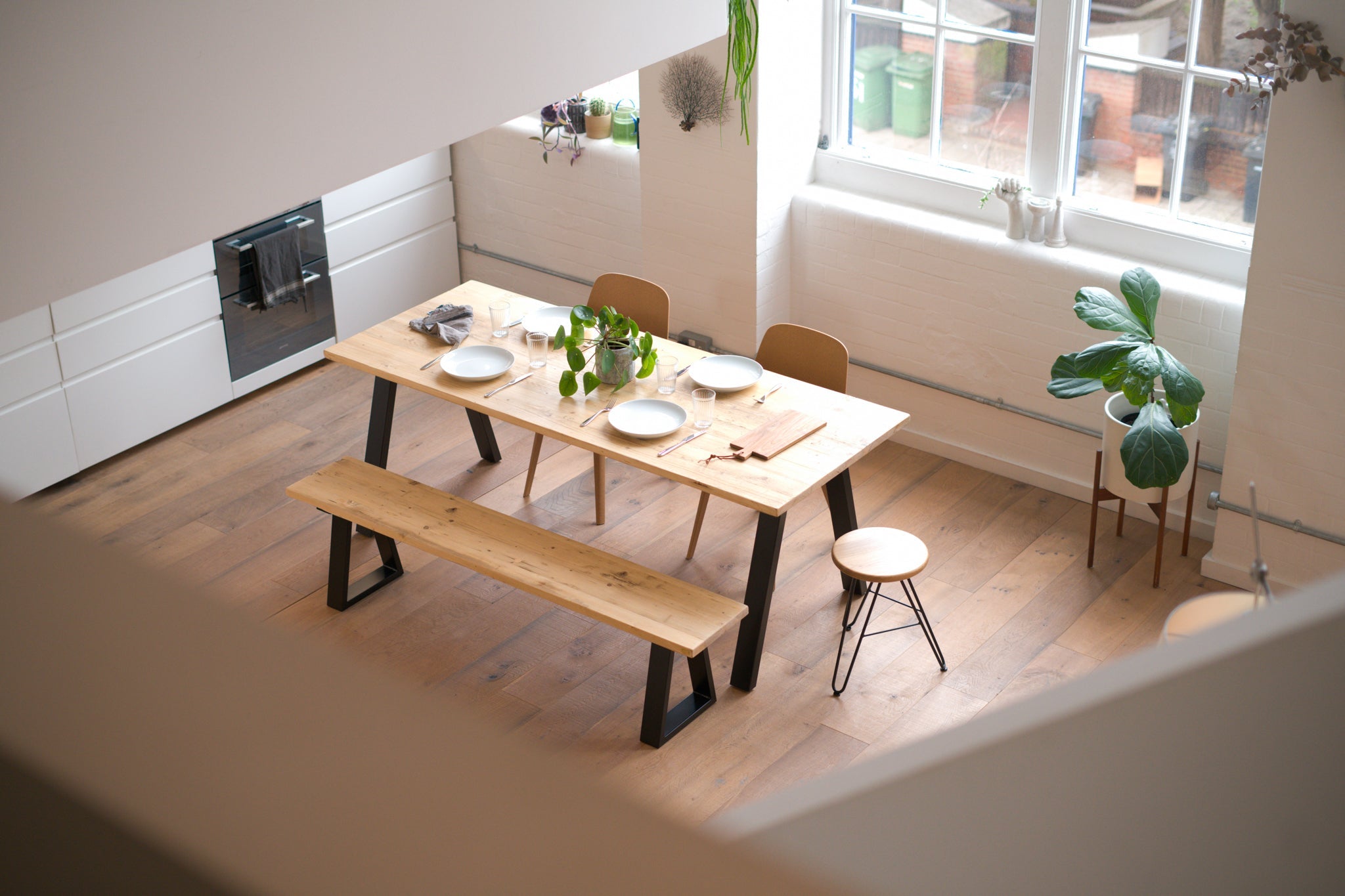
Whether you’re trying to build an expansive dining room table or console table, there are certain challenges that come with additional length. Knowing how to build a long table the right way will save you from the sagging and bending that happens so often.
We consider anything longer than two metres to be a “long table.” In these instances you’ll have to think carefully about the weight of your tabletop, leg placement, and perhaps even add bracing under the top. You can add extra legs or go with a self-supporting frame, too.
The point is, you have options, and we’re going to help walk you through them below so you can bring your vision to life and ensure the final product is something you’re proud of - and something you can actually use!
Learn more below and set yourself up for success with the best table legs and table tops at The Hairpin Leg Co.
“Great products and transformed our old table into something modern which we now love again” - Courtney
“I have recently bought legs for two items of furniture. They complement each other. They are really strong and stylish. The legs arrived quickly by courier. They were easy to buy in the first place.” - Stephen
“Super quick delivery. Item is great quality complete with all the screws. Well packaged. Reputable firm and would use again.” - Inder
The Limits of Long Table Builds
Anything longer than 2m gives you loads of surface area for dining, work, playing board games, puzzling, or group projects. It’s one of the most striking pieces you can build for a home or studio.
But bigger spans come with their own considerations. Understanding these BEFORE you start building can save you headaches down the road. Here’s what you’ll need to think through:
- Many tabletop materials lose stiffness over long spans and can flex under load.
- Thinner tops struggle to stay flat once the unsupported length increases.
- Long panels often need bracing to prevent a noticeable dip through the centre.
- Wide leg spacing can leave too much of the top unsupported, leading to sagging.
- Heavy tops become difficult to handle, fit, and move once assembled.
The good news, though, is you can overcome all these obstacles with our tips on how to build a long table below.
How to Build a Long Table: Step-by-Step Guide
Building a long table just means you’ll need to provide more support. There are a few different ways you can go about that. But if you already purchased table legs for the project, your first instinct is probably to start by gauging whether or not they can support your tabletop.
Will Your Table Legs Support a Long Table?
Most makers worry about the legs first, but leg strength rarely limits table length. Most types of table legs hold up just fine as long as the total load stays within the guidance for the legs you’ve chosen.
The real question is whether the tabletop can stay flat between those legs without bending. A long span really amplifies any weakness in the boards. That means your focus should stay on the material, the thickness, and the support underneath.
Preventing Sagging in Long Tabletops
Long tables fail when the centre of the top begins to dip. This is far more common with softwood boards, thinner tops or panels that carry a wide span without support in the middle. Check these two things before assembly:
- Material choice: Hardwoods and thick plywood handle long spans better than softer, thin boards.
- Top thickness: Anything under 30 mm will often flex at two metres or more.
If you do plan on using wide boards or construction lumber, make sure glue-ups are super tight with straight grain running the same way. As for slab-style tables, keep an eye on any natural weak spots. You want a stiff top before the legs go on.
When and How to Add Bracing to a Long Table
A top that flexes when you press down on the centre needs bracing. Even a very small amount of flex in the tabletop can make a table not feel very stable overall. We have a more thorough guide on adding bracing to a table, but we usually recommend a steel box section or angle iron mounted underneath.
This method stiffens up the table top without changing the silhouette. One brace running with the grain is usually all it takes to solve the problem. However, very wide tops may need two.
A timber brace also works, but it’ll create unnecessary bulk underneath the table - which can get in the way of seating comfort. A full wooden skirt around the perimeter ties the top together and improves strength for traditional builds.
Whatever you choose, don’t forget to allow for wood movement so seasonal changes don’t split the top!
Using a Self-Supporting Frame for Maximum Strength
There’s another option if you want to create a long table that won’t sag. Just use a freestanding table frame! We have some amazing frame options here at The Hairpin Leg Co. which will prevent any flex or sagging in the tabletop, and also provide the strongest possible support for the extra weight of a large table:
- Square Industrial Frame: Available in bench, table, counter, or bar sizes. Lengths range from 120cm up to 240cm. Choose from black or clear coat.
- Quad Frame: Available in bench or table sizes. Lengths range from 120cm up to 240cm. Currently available in graphite gray or black.
Both are sturdy subframes for large, heavy tops or materials that need more support (such as stone tabletops). The steel section is 80x40mm, more than enough to bear the weight of your table top.
They’re super easy and convenient to work with, too. And like all our products here at The Hairpin Leg Co., they’re backed by 60-day returns and 5-year guarantees.
Should You Add Extra Legs?
Another way to support a long table is with additional legs. Just be aware, this can impact appearance and affect seating. This is rarely our first choice for how to build a long table that won’t flex. That said, a third or fourth pair of legs can work. Think of it as a last resort.
Build a Table of Any Length With The Hairpin Leg Co.
Long tables need hardware that stays solid under a wide span, and that’s why our metal table legs and wooden table legs are the #1 choice across the UK.
Every style we sell, from our classic hairpin legs to our industrial table legs, is engineered to stay rigid and bolt up cleanly to real-world tabletops - whether you’re working with hardwood, plywood, reclaimed boards, or something more experimental.
We also have those freestanding frames if you’re looking for something simpler for your long table project. You can also find stunning tabletops here at The Hairpin Leg Co. Makers and DIYers alike have trusted us for more than a decade, and you can too.
Final Thoughts on How to Build a Long Table
Building a long table comes down to managing the span, picking a stiff enough top and supporting it properly so it stays flat over time. It’s pretty straightforward once you understand how the material behaves and where bracing is necessary.
You can learn more about how to install furniture legs and build the table of your dreams in our blog. Our customer service team is always available to provide one-on-one support as well. So, what are you waiting for? Get to work now that you know how to build a long table!


Leave a comment
This site is protected by hCaptcha and the hCaptcha Privacy Policy and Terms of Service apply.