




Metal Table Legs
Metal table legs in steel, from 25cm coffee height to 102cm bar. Hairpin, single pin, wireframe and box-section legs, or a bolt-together frame. Powder-coated colours, or clear coat over raw steel.
Filters

Heights and what they suit
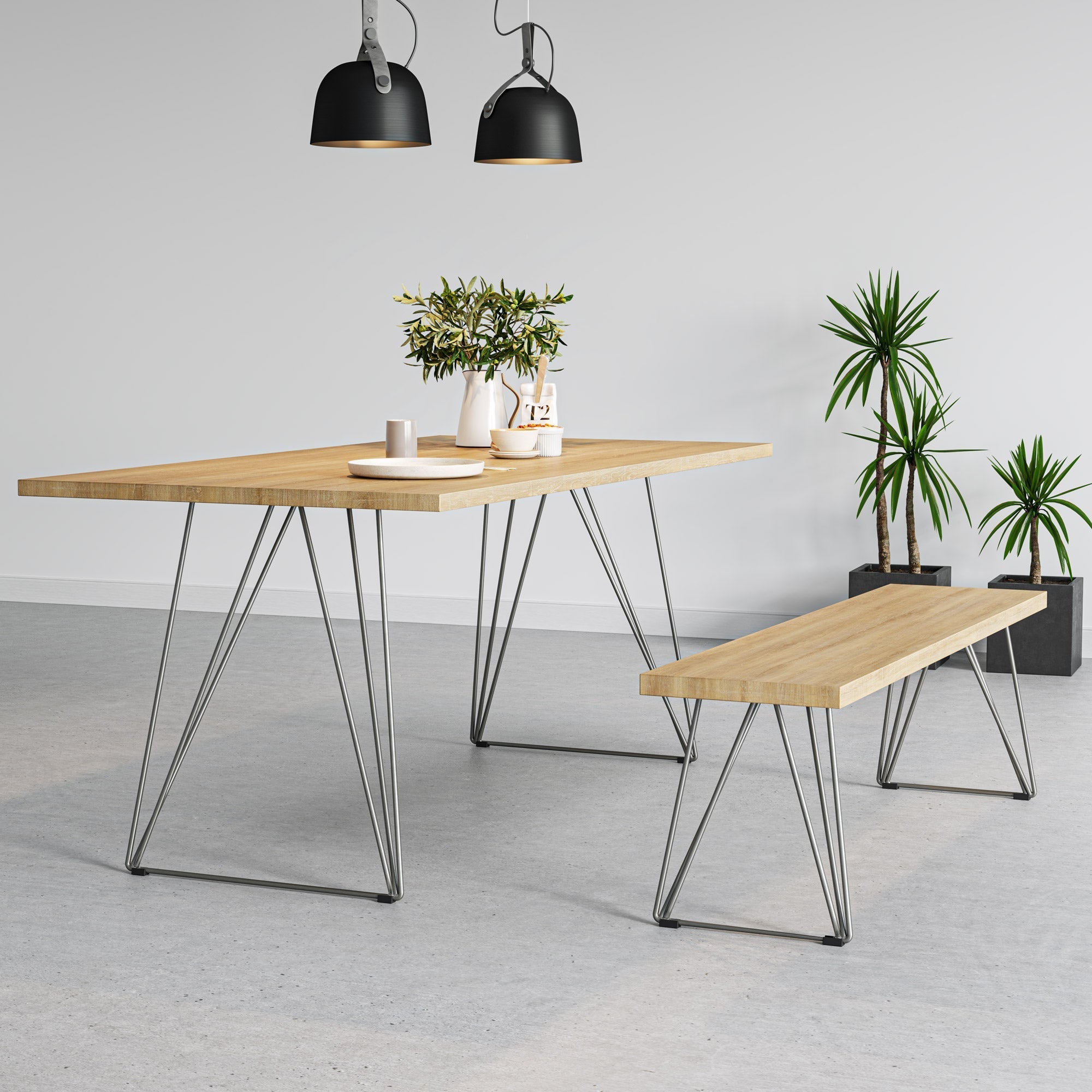
Every leg here is steel, and the height decides what you can build. 25cm and 30cm give a low coffee table, and 35cm is standard coffee height. 40cm works either as a bench seat or as a practical coffee table, and as a bench it pairs with a 71cm table, leaving about 30cm between the seat and the tabletop. 71cm is desk and dining height: add a top of 20mm to 50mm and you land on a finished surface of 73cm to 76cm. 86cm suits a counter, breakfast bar or console table, and 102cm is bar height.
Choosing a style
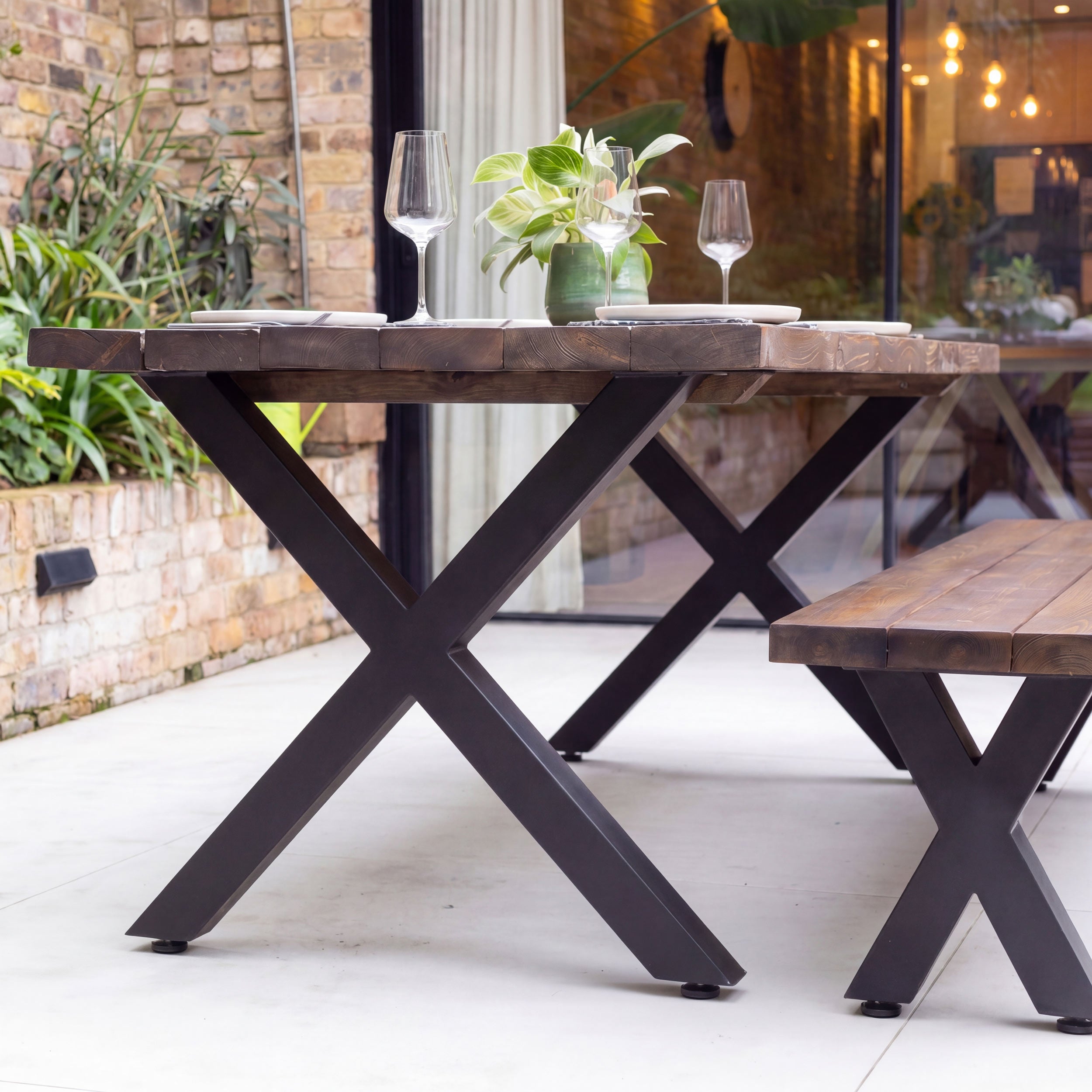
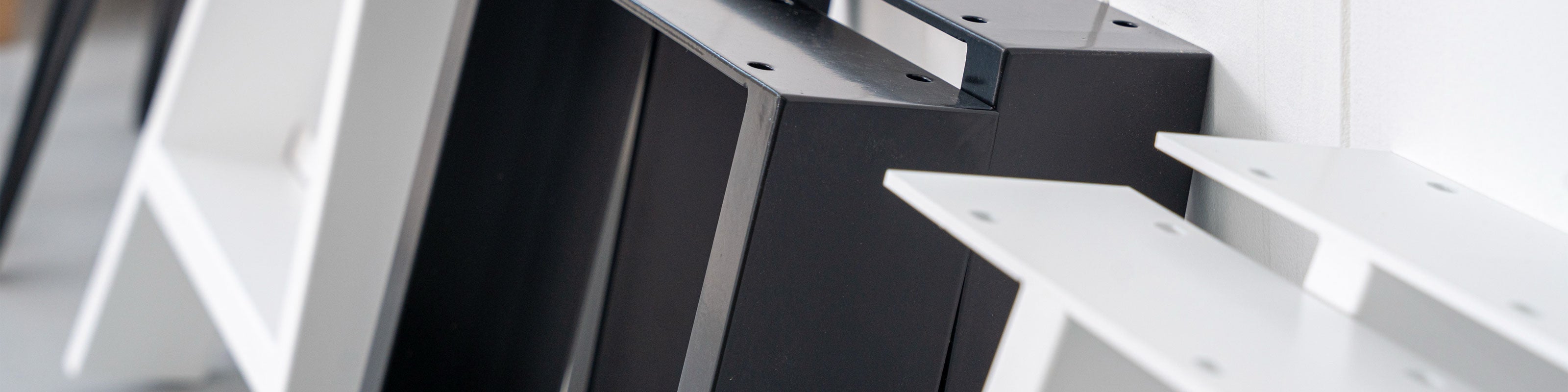
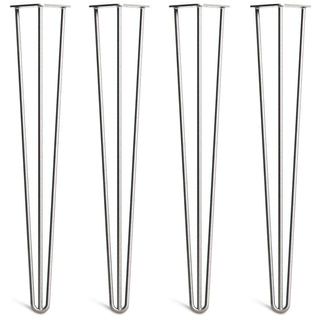
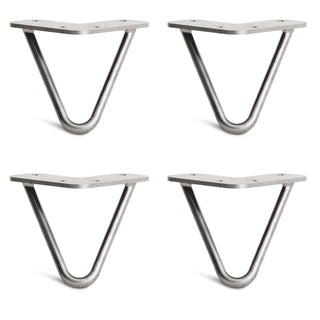
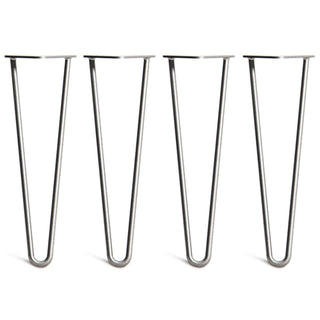
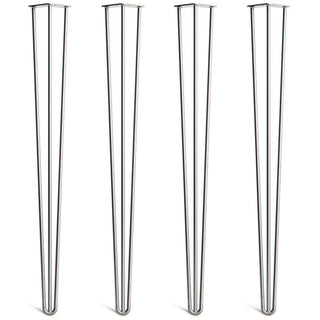
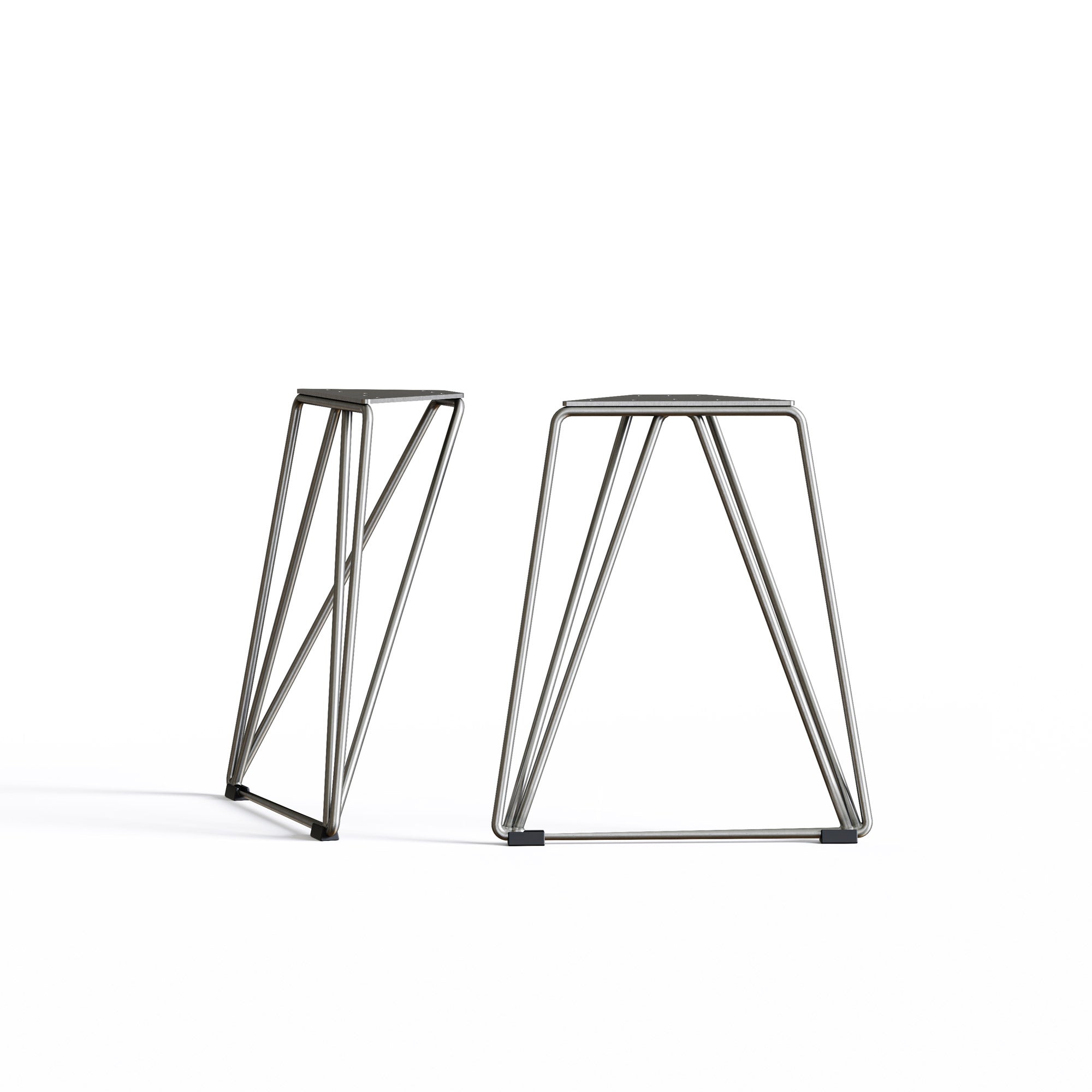
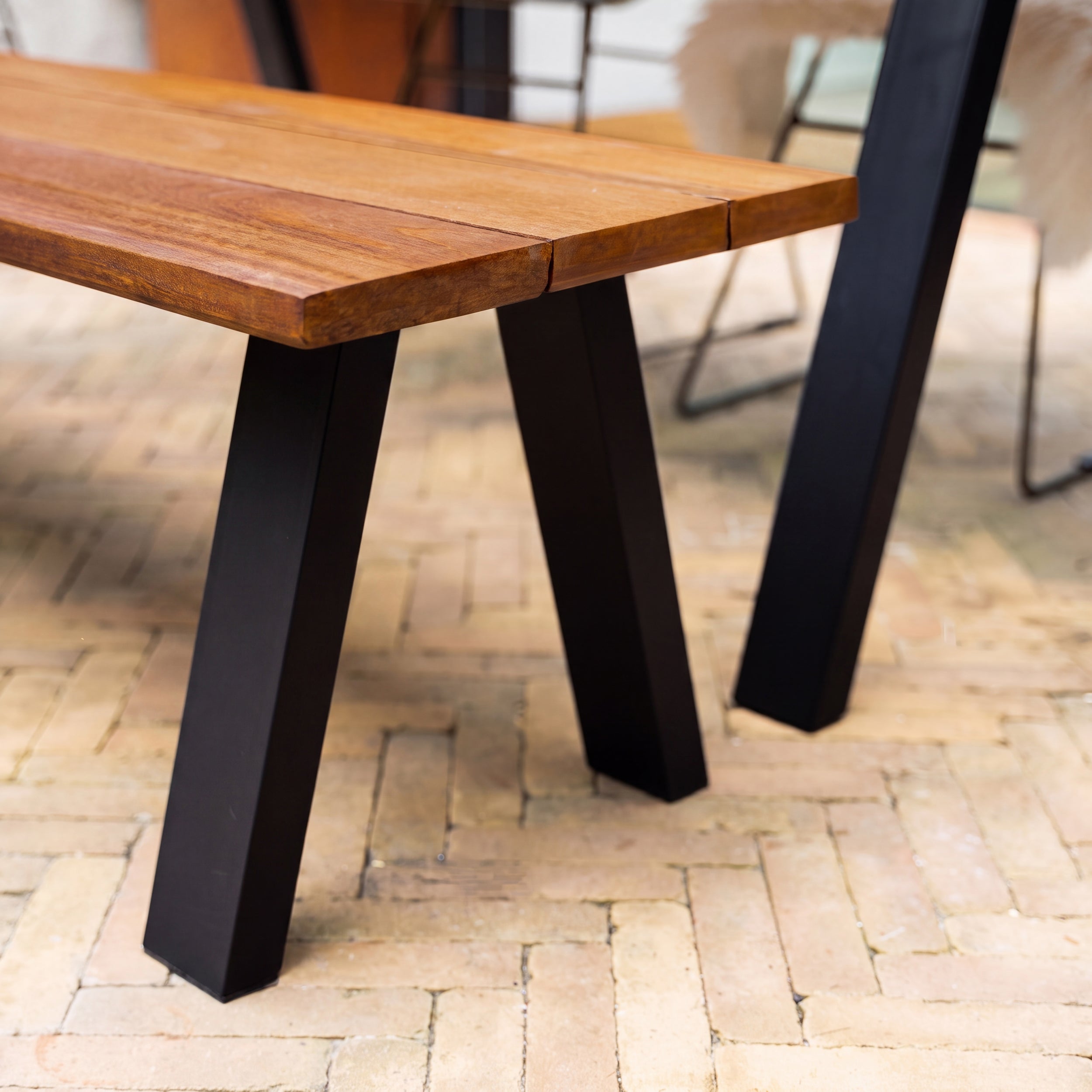
Hairpin legs come as a set of four, fixed about 5cm in from each corner, in a 2 rod or 3 rod design and either 10mm classic or 12mm heavy duty. Single pin and box hairpin legs are sets of four too, with one clean rod or a squared profile per leg. Box-section legs come as a pair for the ends, in A-frame, square, trapezium, V-frame, X-frame and chunky-X shapes, and the welded wireframe is a pair as well. Bolt-together frames, in square or quad designs, are the strongest thing we make: self-supporting, so they suit a thin or non-structural top just as well as an extremely heavy build like a thick live-edge walnut slab. Style is a look choice: no shape is tied to a particular height.
Finishes
Powder coating is the hard-wearing everyday finish, in black and white across the steel legs and a wider palette of colours on the hairpins. Clear coat is a satin powder coat over raw steel that keeps the bare metal look while stopping the steel rusting. Raw steel is available on selected options if you would rather finish it yourself. Colour choice varies by style, so check the options on the leg you want.
Weight and support
For tables, the guidance weights describe how solid a build feels rather than a breaking point: around 60kg for a classic hairpin set, around 120kg for the heavy duty version, and around 150kg for a box-section pair. Frames are stronger again and we still guide to 150kg. The most common issue on a self-build is the top flexing rather than the legs moving, and an L-Channel Stiffening Bar underneath takes that out.
What you'll need
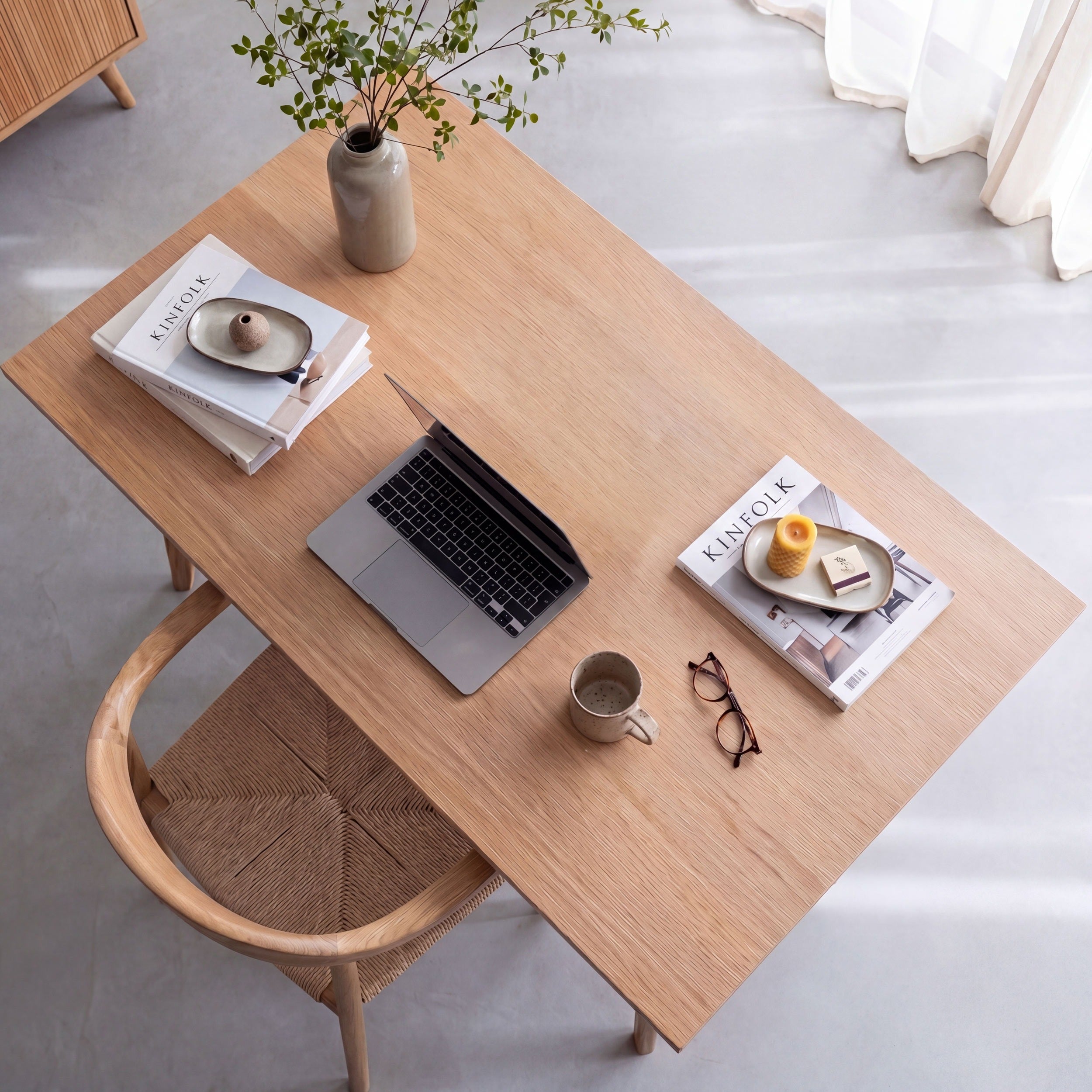
Choose a top from our table tops, which suit desk, dining and coffee builds, or bring your own. We also sell kits containing everything you need. Every leg mounts on a plate that screws up into the top, with screws, a build guide, and a paper fitting template on request. Most builds work with a top from 20mm. The Premium Drilling Kit pairs an automatic punch with a countersink and depth-stop bit for clean, consistent holes.
FAQ
How do I attach metal table legs?
How many legs do I need, and where do they go?
How do I stop the table wobbling?
What metal are the legs made from?
Will the legs rust?
How do I clean them?
Can I paint them myself?
Which height do I need?
How much weight will they take?
Do I need a top, and how thick should it be?
Can I fit these to a glass top?
Can't find your answer? Contact us.